SC TEACHER is charged with administrating the Rural Teacher Recruiting & Retention Incentive (RRRI) as set forth in Proviso 1A.44, Session 126 (2025–2026). This program supports qualifying districts in strategic financial decisions that strengthen recruitment and retention strategies, support continuous improvement, and maximize the impact of the state’s investment.
Measuring ROI
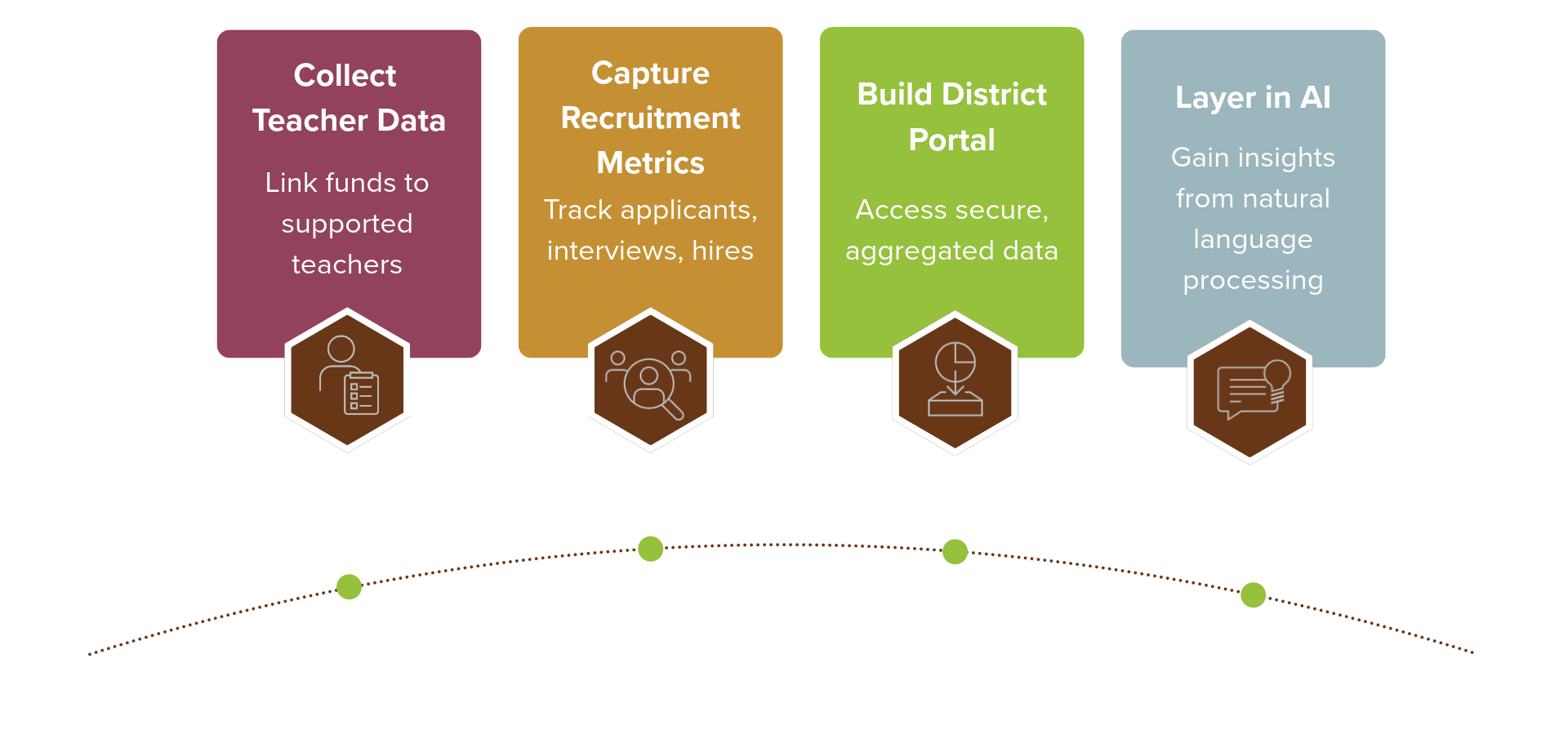
More precise data connected to defined expenditures.
Layering data for measurable outcomes
Our evidence-informed approach layers data sources to support districts and the state in better understanding which recruitment and retention incentives work best, where they work, and under what conditions.
- SC TEACHER survey data
- Educator pipeline and workforce data, including teacher demographics and recruitment pathways
- Community context, including cost of living and labor market data
- District-level expenditure data by RRRI category, including the amount invested in each strategy and resulting recruitment and retention outcomes associated with those investments
District Resources
Districts invested in applying statewide research findings to their strategic decision-making may find the following resources useful.
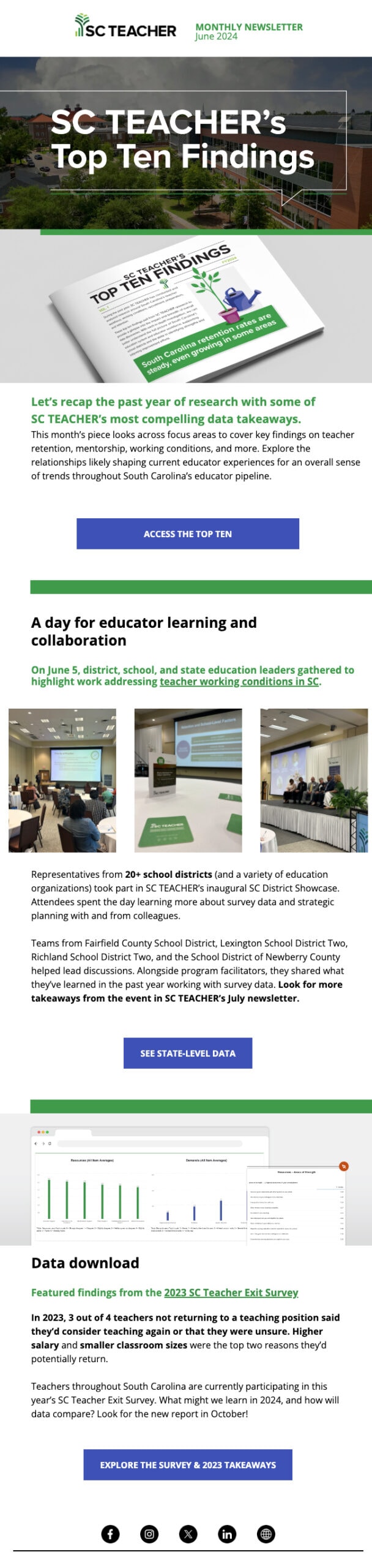
- SC TEACHER’s Top Ten Findings from FY26
- 2025 SC Teacher Working Conditions Survey report
- South Carolina Teacher Attrition, Mobility, and Retention Report for 2024–25
Click here to sign up for the SC TEACHER monthly newsletter to get the latest RRRI updates, SC TEACHER research releases, and tools for applying data to district continuous improvement processes.

Upcoming Dates
- January 14, 2027:
RRRI portal roll-out (required) - June 8–9, 2027:
SC TEACHER Insights Symposium
Survey Administrations
- January 11 – February 12, 2027:
SC Teacher Working Conditions Survey (required) - May 10 – June 18, 2027:
SC Teacher Exit Survey (required)
Data + Insight Workshops
- November 17, 2026:
Strengthening Principal Growth and District Leadership - January 26, 2027:
Supporting Federal Programs and Title Planning - February 9, 2027:
Layering Evidence for Continuous Improvement - March 16, 2027:
Using Data to Strengthen Strategic Planning
FAQs
Districts that are identified as eligible and accepted into the program may participate for up to 3 years, provided they fulfill all requirements.
Participation includes required program obligations such as attending meetings, completing a District Plan + Progress Assessment, submitting reimbursement documentation, taking part in program evaluation activities, and providing required reporting and implementation updates.
The 3-year participation period is designed to give districts sufficient time to implement recruitment and retention strategies, evaluate their effectiveness, and make adjustments based on data and outcomes. This longer-term approach recognizes that meaningful workforce improvements often require sustained investment and continuous advancement over multiple years.
There are a variety of incentive categories. For the full list, read FY27 RRRI Categories + Possible Metrics.
To receive reimbursement, districts must first complete the University of South Carolina supplier registration process and become an approved supplier. Participating districts then develop and submit an RRRI District Plan + Progress Assessment outlining how funds will be invested to support their recruitment and retention goals.
Reimbursement requests must align with the approved district plan and demonstrate a clear connection to the district’s recruitment and retention efforts. Districts will submit reimbursement requests for eligible expenses that support the activities and objectives identified in their District Plan + Progress Assessment.
This process helps ensure that RRRI funds are used strategically to advance district-specific educator recruitment and retention priorities while maintaining compliance with USC reimbursement requirements.
The RRRI District Plan + Progress Assessment is a district-developed roadmap that outlines how RRRI funds will be used to support local educator recruitment and retention priorities. The plan identifies the district’s specific goals, proposed activities, expected outcomes, and strategies that will be implemented to address workforce needs.
The District Plan + Progress Assessment is required to ensure that RRRI investments are purposeful, aligned with district needs, and connected to measurable recruitment and retention objectives. It also serves as the foundation for reimbursement requests, helping to verify that expenditures support approved activities and advance the goals established by the district and approved by SC TEACHER.
By completing an RRRI District Plan + Progress Assessment, districts will strategically target resources where they will have the greatest impact while demonstrating accountability for the use of program funds. All reimbursement requests must align with the district’s approved plan and clearly support its recruitment and retention goals.
As outlined in Proviso 1A.44, SC TEACHER is required to calculate the return on investment of RRRI funds. To do so, two types of data are collected from participating districts:
- Educator tracking data. These data are connected to spending categories at the teacher level, when possible. They include the educators served, educator IDs, the amount invested per educator, and the strategy each investment supports.
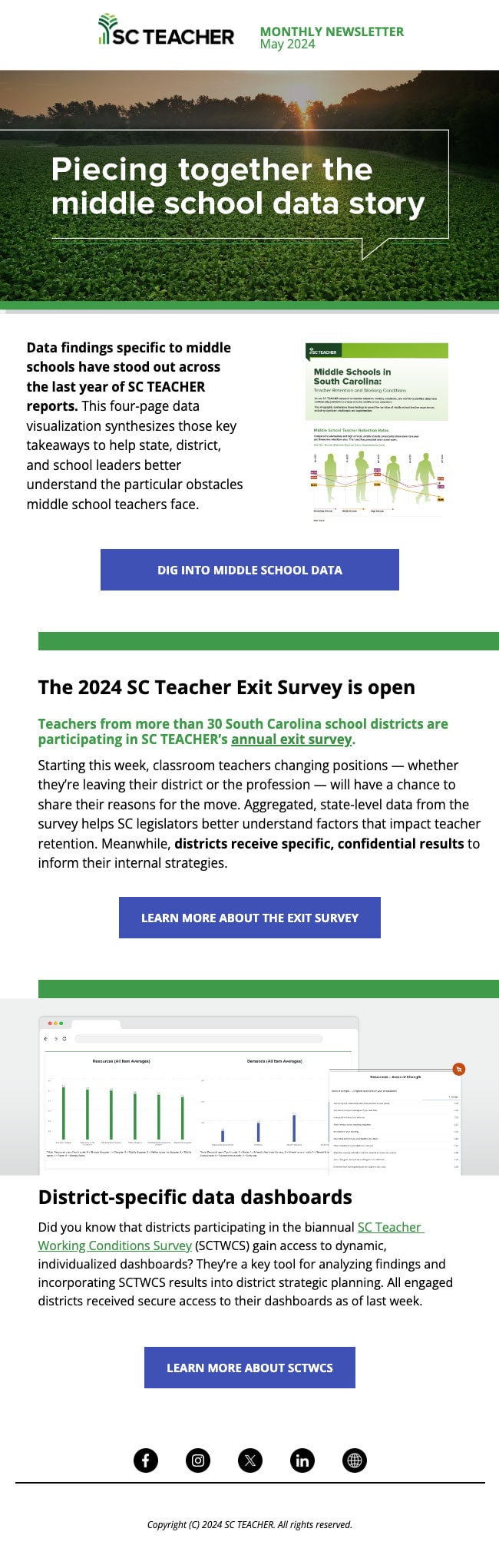
- Educator survey data. RRRI districts are required to participate in three SC TEACHER surveys (two annually):
- The SC Teacher Working Conditions Survey (SCTWCS) is a biennial survey of classroom teachers’ working conditions, job satisfaction, and retention intentions.
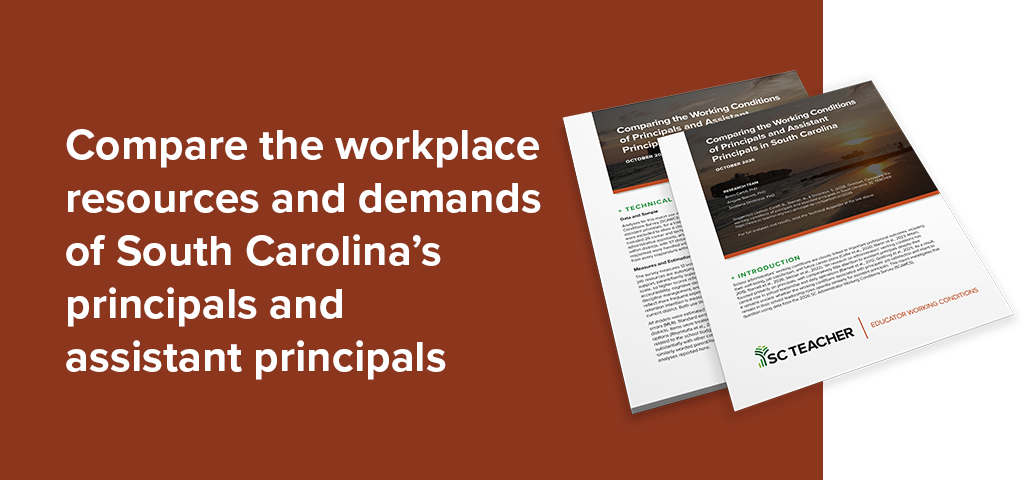
- The SC Administrator Working Conditions Survey (SCAWCS) is a biennial survey of school leaders’ working conditions, job satisfaction, and retention intentions. It runs in the years when SCTWCS does not and allows teacher and administrator results to be analyzed in reference to each other.
- The SC Teacher Exit Survey is an annual survey of classroom teachers leaving teaching positions in their districts, either due to their own decisions or the district not renewing their contract. Findings show how working conditions relate to teachers’ decisions to move to another district or leave the classroom.
Survey results are critical data that are necessary for districts to have a current and comprehensive picture of educators’ working conditions and reasons for staying or leaving. In addition to informing district leaders’ strategic planning efforts, working conditions and attrition data support required return-on-investment calculations.
SC TEACHER connects investments to supported strategies and to recruitment, retention, and working conditions outcomes. This helps us identify promising approaches, document outcomes associated with RRRI, and build an understanding of what works and in which district contexts. The findings will inform future funding decisions, district supports, and continuous improvement efforts.
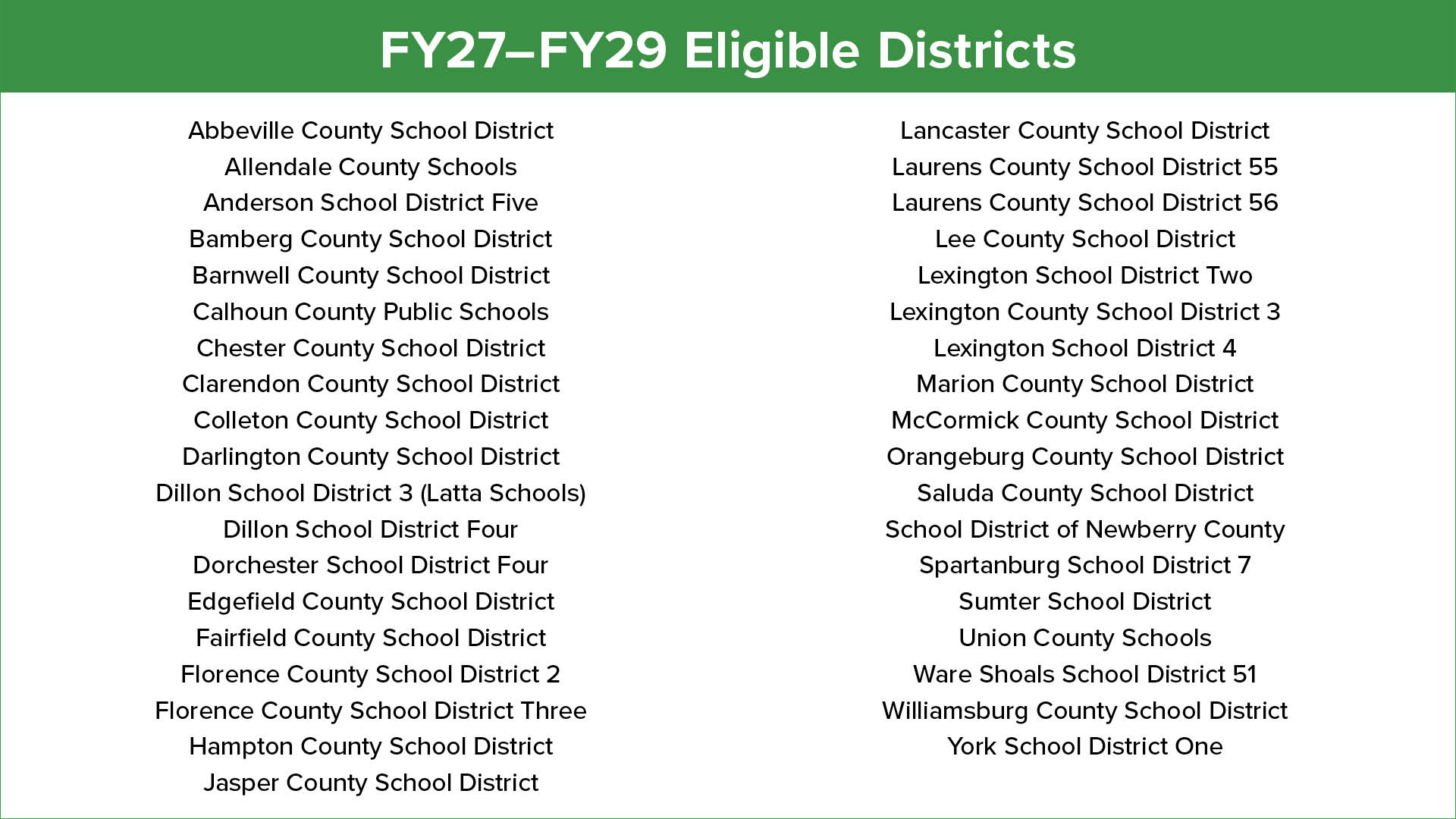
Each fiscal year, eligible districts will be identified based on the following criteria: 1) The district’s 3-year average teacher retention rate (calculated using data for eligible classroom educators) falls below the statewide 3-year average district retention rate, and 2) the district is not in the highest quartile of districts based on the index of taxpaying ability.
Districts that meet these conditions are eligible for funding and may apply to participate in the RRRI program.